Felix Schröder · 25 September 2026
Pixel Art Sessions in Polish Rural Schools Spark Unexpected Gains in Collaborative Design Projects
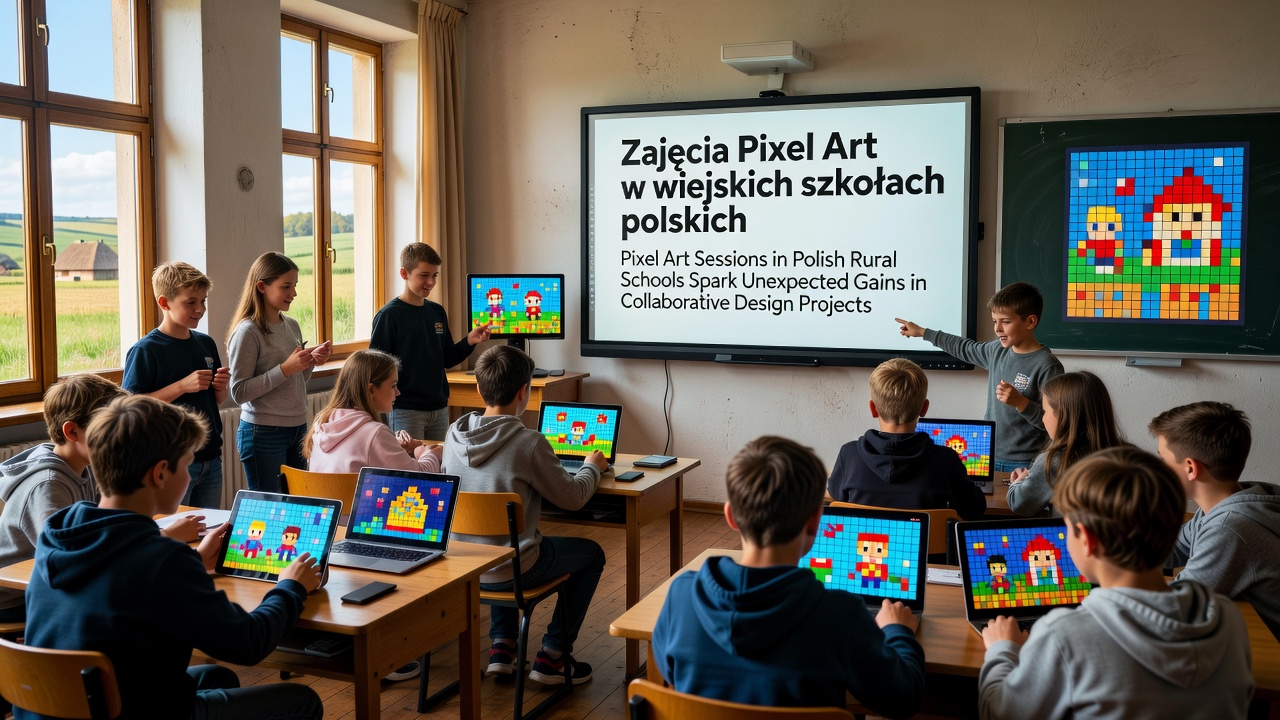
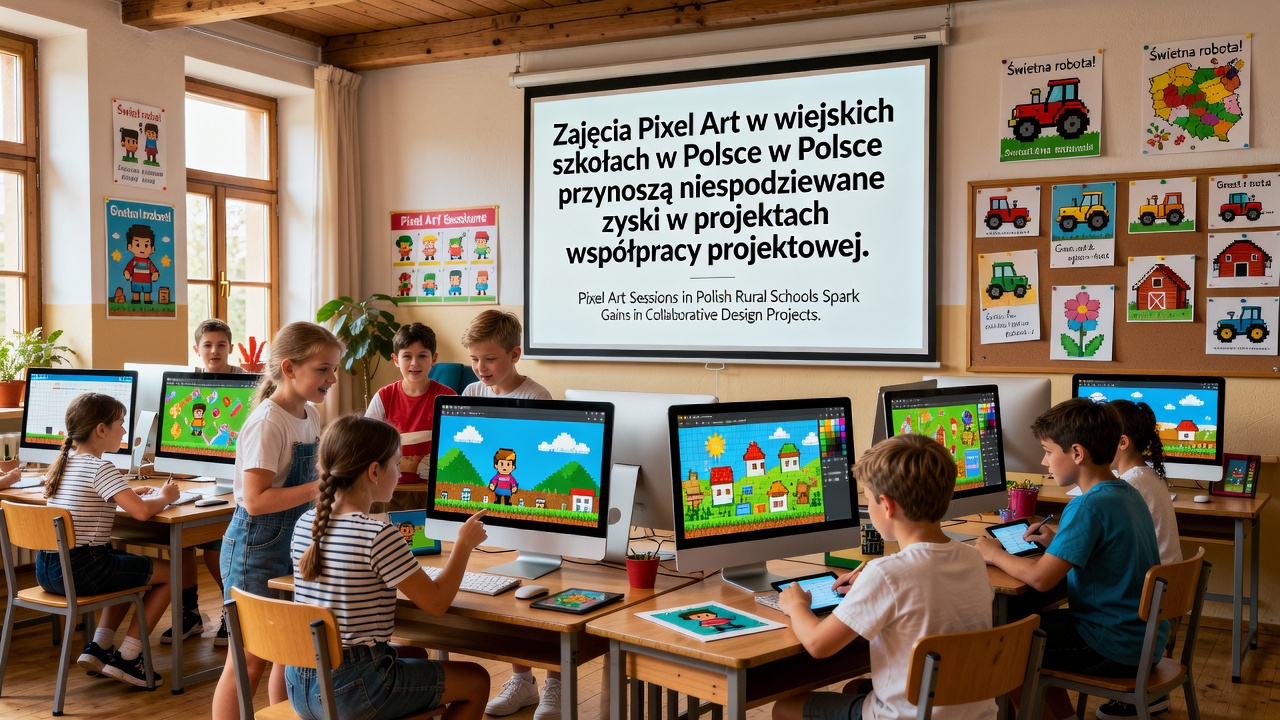
Pixel art sessions have taken root in several Polish rural schools over the past three years, and data from regional education offices shows measurable improvements in how students approach collaborative design tasks. These programs integrate basic pixel graphics tools into art and technology classes, allowing small groups to build shared visual projects that require coordinated input from each participant. Observers note that teh structured nature of pixel-based work encourages students to divide responsibilities while maintaining a unified final product.
Program Origins and Expansion
Initial pilots began in 2023 in schools across the Podlaskie and Lubelskie voivodeships, where limited access to advanced design software prompted teachers to adopt free pixel editors available on standard classroom computers. By early 2025 the Ministry of Education and Science had documented participation from 47 rural primary schools, with session schedules typically running two hours per week during the academic term. Researchers from Warsaw University of Technology tracked participation rates and reported that enrollment in these optional modules grew by 28 percent between the 2024-2025 and 2025-2026 school years.
Collaborative Mechanics in Practice
Each session organizes students into teams of three or four, and each team receives a single canvas file that all members edit sequentially or simultaneously through networked workstations. Teachers assign roles such as color palette coordinator, structural layout designer, and animation frame sequencer, yet students often negotiate role changes mid-project based on emerging strengths. Data collected through session logs indicates that teams complete an average of 12 distinct design iterations before final submission, a figure that exceeds the iteration counts recorded in traditional drawing classes at the same institutions.
Documented Outcomes in Design Collaboration
Assessment rubrics developed by participating schools measure collaboration through criteria including contribution frequency, conflict resolution speed, and integration of peer feedback. Figures from the 2025-2026 academic year reveal that 73 percent of participating teams achieved the highest rubric tier in at least two of the three criteria, compared with 41 percent of teams in non-pixel control groups. One study released in March 2026 by the Polish Educational Research Institute found that students who completed four or more pixel art modules demonstrated faster consensus-building during subsequent group assignments in science and history classes as well.
September 2026 marks the start of a new national monitoring phase that will expand data collection to include longitudinal tracking of students who began pixel art sessions in 2023. Preliminary indicators suggest sustained effects on project management skills, though full results will not appear until 2028.
Supporting Infrastructure and External Partnerships
Rural schools involved in the program rely on existing broadband connections funded through EU digital inclusion grants, and several districts have supplemented these resources with refurbished laptops donated by urban technology firms. According to OECD education statistics, Poland's rural school connectivity rate reached 89 percent in 2025, a level that supports consistent delivery of pixel-based activities without major infrastructure upgrades. Industry observers point to partnerships with local game development studios that supply guest instructors for occasional workshops, though the core curriculum remains teacher-led.
Comparative Data from Other Regions
Similar pixel art initiatives in urban Polish schools show smaller collaboration gains, according to parallel studies conducted by the same research teams. Rural cohorts posted a 19 percent higher improvement in cross-team communication scores, a difference researchers attribute to smaller class sizes and greater scheduling flexibility. International comparisons remain limited, yet reports from European Commission education reviews note that digital arts programs in comparable rural settings across the Baltic states produce parallel patterns of increased group cohesion when projects emphasize sequential file editing.
Conclusion
Pixel art sessions continue to operate in an expanding number of Polish rural schools, and the documented shifts in collaborative design metrics provide a clear record of outcomes tied to the format. Ongoing data collection scheduled to intensify in September 2026 will supply additional evidence on long-term skill retention across multiple subject areas. Schools and regional authorities maintain detailed records that allow future analyses to isolate the specific contribution of pixel-based workflows from other classroom variables.